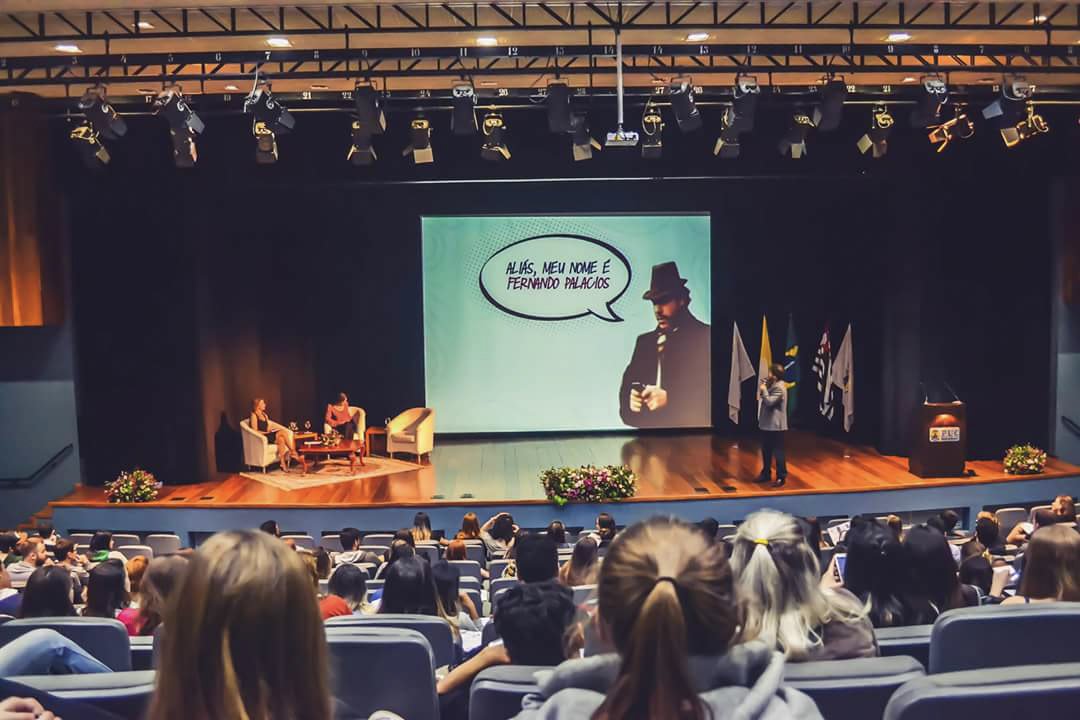
Storytelling for change management gives a transformation program a protagonist the company recognizes as itself. When people can locate their own position in the story, adoption stops depending on enforcement.
Every large change arrives with the same equipment: a deck, a timeline, a set of pillars, a cascade calendar and a mailbox for questions. The equipment describes the change with precision, and it still leaves the audience standing outside of it, watching a plan happen to them. Fernando Palacios has spent two decades converting that kind of material into narrative that survives the walk back to the desk. Storytellers, founded in 2006, was the first storytelling company in Brazil, and the method behind it has trained more than 30,000 professionals.
The Problem: Compliance Is Cheap and Belief Is Expensive
A change program produces two measurable behaviors at once. People repeat the new language, and people keep working the old way. Both can happen in the same week, in the same team, inside the same person.
Repetition is easy because language is cheap to copy. The old behavior holds because it answers to a story people already believe about how work really gets done here, and that story has years of evidence behind it. A rollout that ignores it competes against a narrative with a track record, using a slide with none.
So the operating unit of change management is the conversation in the corridor after the meeting. Everything upstream of that corridor is preparation for it.
Why the Usual Instruments Run Out of Road
Three instruments carry most of the weight in a rollout, and each has a ceiling that shows up fast.
The town hall buys reach and very little retention. The audience receives the case for change in a compressed hour, and the questions that matter surface three weeks later, when the town hall is over.
The cascade deck multiplies the message through managers, which multiplies the variance. Forty managers present the same forty slides at forty different levels of conviction. Teams read the conviction and ignore the slides.
The culture campaign attaches a vocabulary to the change: values, behaviors, a logo, a hashtag. Vocabulary spreads easily and detaches just as easily from the work, because a word costs nothing to say and a habit costs something to break.
Each instrument does the job it was built for. The gap they share is dramatic: they announce a destination and skip the middle, where the audience lives.
How the Palacios Method Rebuilds a Rollout as Narrative
The Palacios Method treats a transformation program as a story with an author, a cast and a sequence. It runs on Narrative Intelligence and Strategic Entertainment, with the 8 Steps as its working engine, the layer that keeps a business narrative watchable while it does its work. Applied to change, it answers four questions the plan leaves open.
It names the loss. Every change removes something people valued. A program that stays silent about the loss reads as evasive, and naming it early buys the credibility the rest of the story will spend.
It gives the audience the lead role. The protagonist of a transformation is the person who has to work differently on Monday. The sponsor is a supporting character with a budget.
It puts a real obstacle on stage. The obstacle is usually known to everyone in the room already, which is why saying it out loud lands so hard and why staying quiet costs so much.
It sequences the arc across months. A rollout is a series, so it needs episodes, open questions and payoffs. The team that hears chapter one in March needs chapter two in April, with the March promise paid.
Teams that need the same architecture for the daily flow of messages will find it in storytelling for internal communications. Leaders who have to carry the arc in person will find the delivery side in leadership storytelling.
The Dona Benta Case: A Portfolio That Became a Play
In 2008, the Dona Benta portfolio at J. Macêdo ran to 1,248 slides of material.
Fernando Palacios turned those 1,248 slides into a theatrical narrative, the stage piece As Filhas do Dodô. The brands walked on as characters, each wanting something and each blocked by something, and the material became the terrain of the plot. The audience stopped auditing a document and started following a story, and the direction became something people could retell with the deck closed.
The project remains the cleanest demonstration of the principle. A large volume of information asks the audience to assemble the meaning themselves. Structure performs the assembly for them, which is how information turns into a decision to act.
Five Steps to Build the Change Story
1. Write the story people already believe. Interview ten to fifteen people across levels and ask how work really gets done. The version they describe to each other is the antagonist of your program, and it deserves a written page.
2. Name the loss in one sentence. Something ends: a routine, a status, a piece of autonomy. Put it in writing and say it publicly before someone else says it for you.
3. Cast the protagonist by name. Choose a real role and describe one Monday in that role before the change and one after. Abstraction is where change programs go to die.
4. Build the arc in episodes. Map the rollout as chapters with dates, each carrying a promise and paying the previous one. A postponed chapter still owes the update it promised, and the audience keeps score.
5. Hand managers a story to tell. A script produces forty flat readings. A story with one spine, one obstacle and one image lets each manager use their own voice and still land the same meaning.
Frequently Asked Questions
How Long Does a Change Narrative Take to Build?
The writing takes days. The interviews that make it true take two to three weeks, because the old story has to come from the people who live inside it. Programs that skip the interviews produce a narrative that sounds accurate in the boardroom and lands as fiction on the floor.
Does This Replace the Change Framework We Already Use?
It sits on top of it. Governance, workstreams and milestones keep doing their job. The narrative layer decides what the organization hears, in what order, and with what stake attached, which is the part most frameworks leave to whoever is writing the deck that week.
What If the Change Is Genuinely Bad News?
Bad news is the easiest material to structure honestly and the hardest to fake. Say the loss, say the reason, say what stays. Audiences forgive difficulty and punish evasion, and the punishment outlives the restructuring.
Your Next Step
If your transformation has a complete plan and a room that has stopped listening, the missing layer is narrative architecture. Explore the services, see how the method is taught in corporate storytelling training, or get in touch with Fernando Palacios.
A calibrated method built from 20 years of real rooms, real audiences, and real results. The Palacios Method stack ensures the narrative lands. Not vibe typing. VibeStorytelling.
Next Step
Bring the Palacios Method to your team
The AI is not the author. The AI is the pen. Fernando Palacios is the author. Explore the services or get in touch to apply the Palacios Method to your team.