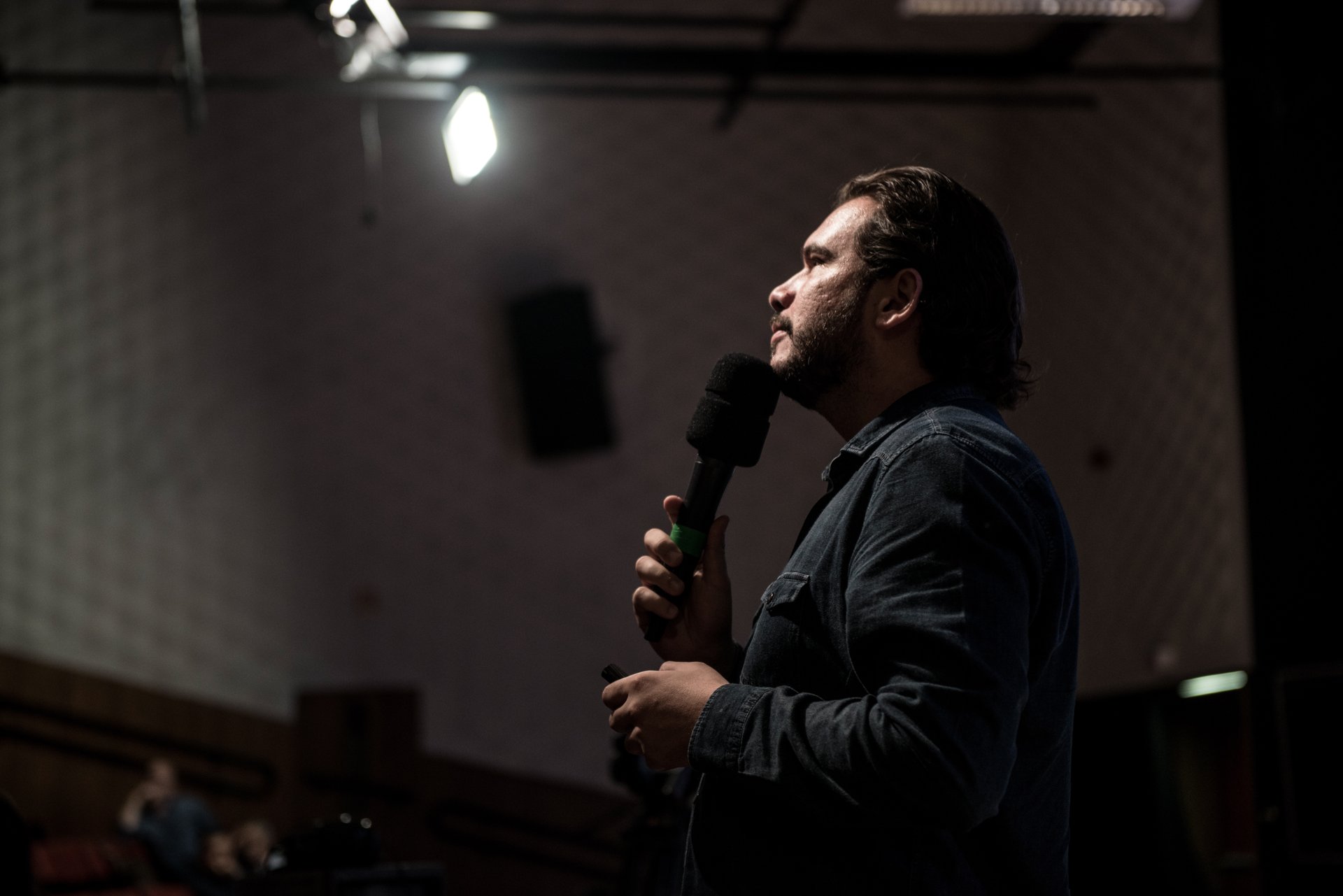
Presentation anxiety is largely a structural problem wearing an emotional costume. A speaker who knows exactly what happens next carries a fraction of the load of one who is deciding it live.
More than 30,000 professionals have been trained in this method through Storytellers, founded in 2006 as the first storytelling company in Brazil. Across 20 years of those rooms the pattern holds: the people who describe the worst nerves are almost always the people improvising the middle of their own talk.
The Problem: The Fear Arrives Where the Structure Ends
Ask a nervous presenter where the fear lives and the answer is precise. The opening is usually fine, because it was rehearsed. The closing is fine, because it was written. The dread sits in the middle, in the stretch where the plan says cover the context and the speaker has to invent the path in real time.
That is a working memory problem before it is an emotional one. A speaker improvising structure is choosing the next sentence, tracking the clock, reading faces, holding the point and monitoring their own voice at the same time. The body responds to overload the way bodies do.
Then the anxiety feeds itself. The speaker rehearses harder, which usually means rehearsing words, which produces a memorized script that collapses the moment a question breaks the order.
Why the Standard Advice Has a Ceiling
Breathing techniques work on the symptom and they work well. They lower heart rate and steady the voice, and they leave the cognitive load exactly where it was.
Power poses and visualization change how a speaker feels in the two minutes before walking on. They have nothing to offer at minute fourteen, when the argument has to turn.
Rehearsal helps in proportion to what is being rehearsed. Repeating a script builds a fragile object. Repeating a structure builds a flexible one, because the speaker can reach any section from any point in the talk.
Severe presentation anxiety can also be a clinical condition. Structural work sits alongside professional support, and anyone whose symptoms go beyond nerves deserves both.
How the Palacios Method Lowers the Load
The Palacios Method runs on Narrative Intelligence and Strategic Entertainment, with the 8 Steps as its working engine. For a speaker the value is mechanical: fewer decisions to make on stage.
A known sequence. Each section has a job and a destination, so at any moment the speaker knows where they are and what comes next.
Fewer things to remember. A story is recalled as a chain of consequences, so holding the first beat makes the second one available.
Somewhere to put attention. Once the speaker is tracking the arc, attention has a destination outside themselves, which quiets the self monitoring that drives the spiral.
Recovery built in. Losing your place inside a structure means returning to the structure. The audience experiences a pause.
The applied version for board and leadership rooms is in storytelling for executive presentations, the team level program is corporate storytelling training, and the version for people who present as leaders every week is leadership storytelling.
What Twenty Years of Classrooms Show
Participants arrive naming delivery as their problem: nerves, voice, hands, blanking.
The training spends its hours on structure, and the delivery complaints tend to fade along the way. Once a participant can state the spine of their talk in one sentence and name the function of every section, the stage stops being a place where they have to invent under pressure.
That is the view from the front of the room across two decades of classrooms. Fernando Palacios was named World's Best Storyteller at the World HRD Congress in Mumbai, in 2017 and 2018, the only Brazilian to receive the award.
The practical implication for anyone dreading a talk next month: the highest return activity available tonight is rewriting the structure.
Five Steps for the Next Talk
1. Write the spine in one sentence. What the audience will believe or do at the end. If you cannot write it, the anxiety is diagnostic and it is telling you something accurate.
2. Name the function of every section. Setup, complication, evidence, turn, payoff. A section with no function is where you will lose your place.
3. Rehearse the map. Practice moving between sections in different orders until you can enter any part from any point. Words can stay improvised once the map is solid.
4. Script the first 60 seconds and the last 30. The two moments where nerves peak deserve written sentences. The middle runs on structure.
5. Plan the recovery move. Decide in advance what you do when you blank: a pause, a glance at the map, a return to the last section's destination. Rehearse it once so it exists.
Frequently Asked Questions
I Go Blank in Question Time. Does Structure Help There Too?
Yes, and that is where improvisation belongs. With a spine in place, every answer can be routed back to one of your sections, which gives you a landing point for any question that arrives.
Will I Sound Robotic Working From a Structure?
The opposite tends to happen. Freed from remembering words, speakers use their own voice, pause naturally and respond to what the room is doing in front of them.
How Much Time Does This Take Before a Talk Next Week?
An afternoon for the structure and two rehearsals for the map. Most of the gain arrives with the one sentence spine, which takes about an hour of honest thinking.
Your Next Step
If a talk is coming and the dread is already here, start with the spine and the function of each section. Explore the services or get in touch with Fernando Palacios.
A calibrated method built from 20 years of real rooms, real audiences, and real results. The Palacios Method stack ensures the narrative lands. Not vibe typing. VibeStorytelling.
Next Step
Bring the Palacios Method to your team
The AI is not the author. The AI is the pen. Fernando Palacios is the author. Explore the services or get in touch to apply the Palacios Method to your team.