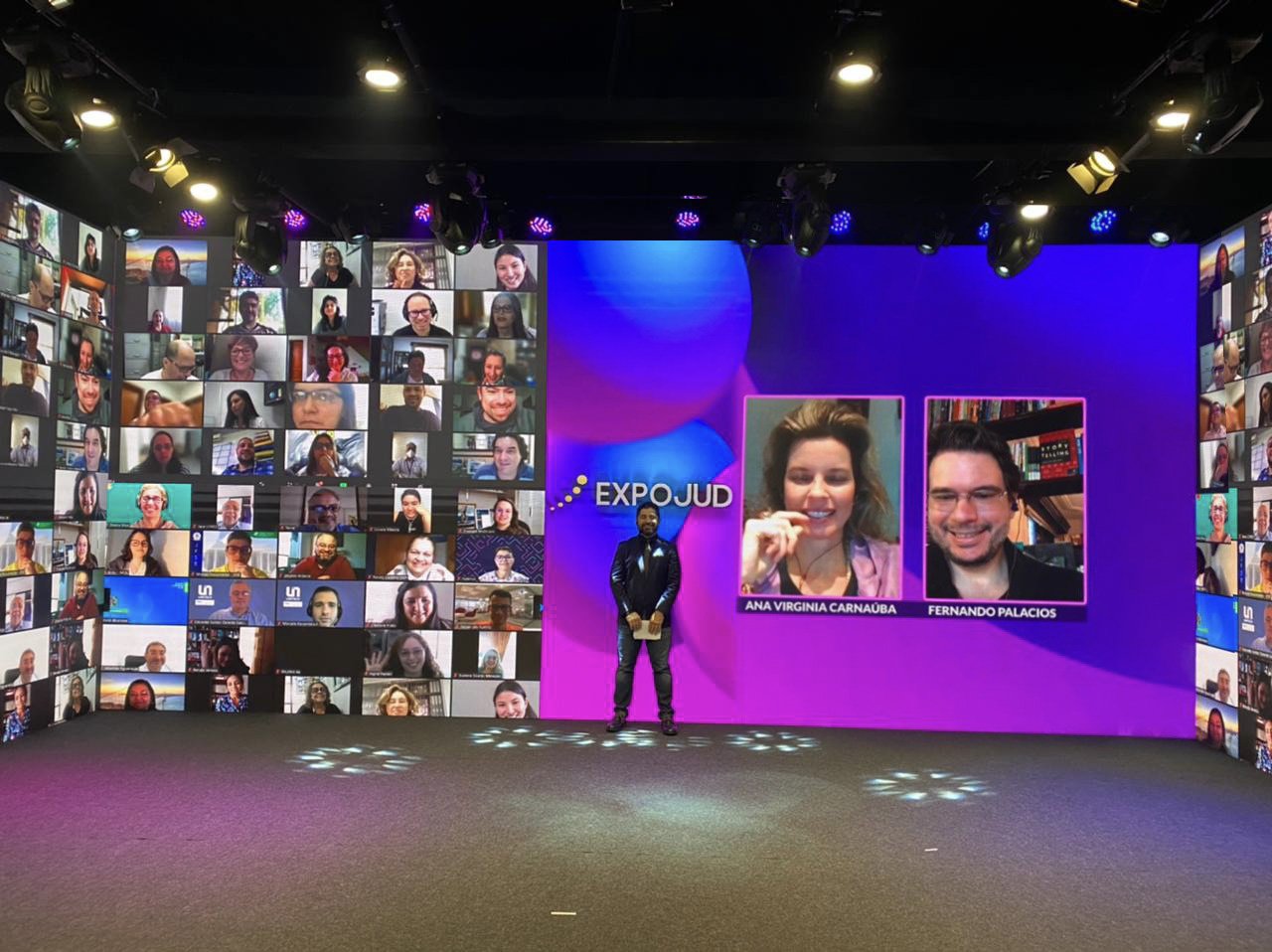
In 2014 IBM took a message to a corporate event and handed it to actors. The piece was a three-act corporate comedy, written by Fernando Palacios with co-authors, staged with theatrical direction and produced by Arenna.
Fernando Palacios founded Storytellers in 2006, the first storytelling company in Brazil, and 20 years of corporate rooms keep exposing the same gap in the town hall: companies rehearse what the meeting will say and leave the shape of the hour to whoever owns the deck.
Why the Company Meeting Fades by Friday
The standard town hall is a sequence of departmental reports. Each block is accurate, each block is short, and the sum of them is a list. A list gets heard once and stored nowhere.
The second gap is casting. Results that describe the company leave the individual employee outside the frame, waiting for the two minutes that mention their area and drifting through the rest.
The third is the absence of tension. Everything reported has already happened, everything is under control, and the hour closes on thanks. A room that senses nothing at stake spends the time on a laptop.
The Direct Answer: Give the Quarter a Plot
Run the town hall as one story: a protagonist the room recognizes, an obstacle the company is facing right now, and a decision that is still open when the meeting starts. Departmental updates become evidence inside that story, placed where they answer a question the audience has already formed.
Order carries most of the work. Name the obstacle before the plan, show what it costs in terms an employee can picture, then let each leader speak to the part of the obstacle they own. The hour ends on what happens in the first week, spoken by the person accountable for it.
The honest measure of a town hall is retelling. Someone who missed the meeting should hear an accurate version from a colleague at lunch, and that version is the one the company will act on. The mechanics of retelling across a company sit in internal communications.
How the Palacios Method Shapes the Hour
The Palacios Method runs on Narrative Intelligence and Strategic Entertainment, with the 8 Steps as its working engine. The 8 Steps give the hour a load-bearing sequence: what the organization wants, what stands in the way, what changes, what it costs, what happens next. Every agenda block takes a position in that sequence and earns its minutes there.
Strategic Entertainment supplies the properties an audience needs to stay in the room. Tension comes from the size of the obstacle, character comes from naming the people who carry it, and stakes come from the consequence of nothing changing. All three are drawn from the business, so they survive a room of skeptics.
The IBM comedy is that principle at full theatrical scale: three acts, characters an audience recognizes from their own workday, and a turn between the acts. A town hall can borrow the property that made the piece land, an hour built as acts with a turn between them, using only the leaders already on the agenda. The full architecture sits in the method.
Running the Town Hall: Five Steps
1. Write the obstacle in one sentence. Before the agenda exists, state what stands between the company and where it says it is going. If that sentence takes a paragraph, the meeting will take an hour and land nowhere.
2. Cast the room. Decide which group in the audience is the protagonist of this quarter and write the obstacle from where they sit. A town hall with a protagonist gives every other group a reason to watch.
3. Open on the tension. The first substantive block shows the cost of the current situation. Results and celebrations land harder once the room knows what they were bought against.
4. Put one live decision on stage. Announce something in the meeting that the audience has yet to read in an email. A room that witnesses a turn has a reason to be there in person and a story to carry out of the door. More on why routine updates go unread in why a team ignores your updates.
5. Close on the first week. Name what changes on Monday, who owns it, and how the company will know it happened. Those final two minutes are the part most likely to be repeated accurately.
Frequently Asked Questions
How Long Should a Town Hall Be?
Long enough to move once through the sequence and stop. The hour ends when the obstacle, the plan, the evidence and the first week have each been stated once. Blocks that exist because a department expects a slot belong in a written recap.
What Should the Question and Answer Block Do?
It should extend the story. Seed it with the two questions leadership is dreading and answer them from the stage, because the room is already holding them and the meeting gets judged on whether they were named. Questions left unasked travel anyway, in worse wording.
Your Next Step
Take the agenda of your next town hall and drop the order it inherited. Write the obstacle first, decide who the quarter belongs to, and place the reports where they answer the doubts that obstacle raises. When the same hour has to work for an external audience, the staging rules are in corporate events and keynotes.
To rebuild a town hall with the method, explore the services or get in touch with Fernando Palacios.
A calibrated method built from 20 years of real rooms, real audiences, and real results. The Palacios Method stack ensures the narrative lands. Not vibe typing. VibeStorytelling.
Next Step
Bring the Palacios Method to your team
The AI is not the author. The AI is the pen. Fernando Palacios is the author. Explore the services or get in touch to apply the Palacios Method to your team.