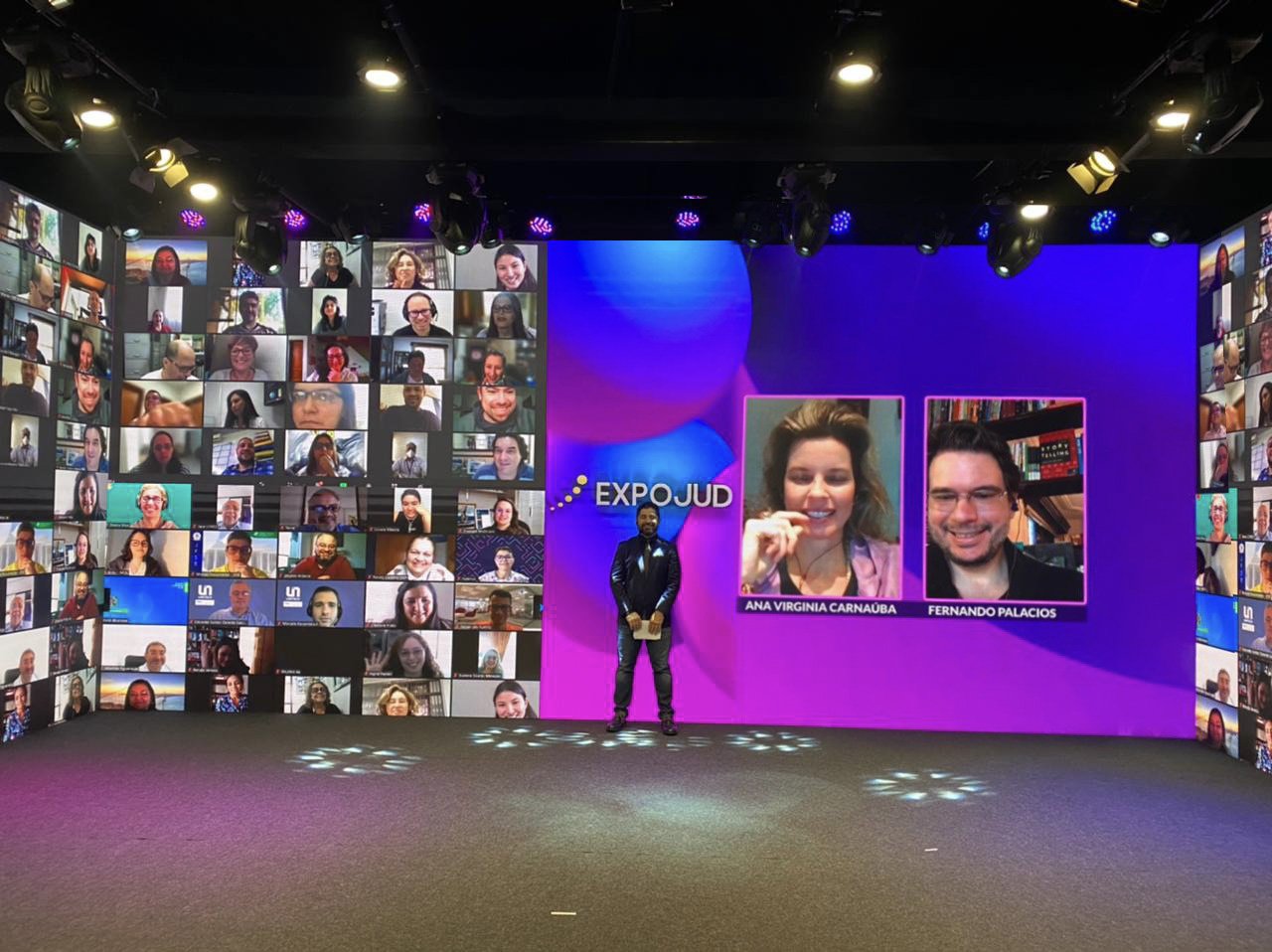
Hiring a keynote speaker is a bet on one hour that a whole room will remember or forget together. Most of that outcome is decided by the brief you write, well before a shortlist exists.
Fernando Palacios founded Storytellers in 2006, the first storytelling company in Brazil, and has trained more than 30,000 professionals across 10 countries: Brazil, India, the United States, Portugal, Peru, the United Kingdom, the Netherlands, Singapore, Argentina and the United Arab Emirates.
This page covers hiring a speaker for a stage: one room, one date, one audience that assembles and disperses. Selecting a company to run a training program for your team is a separate purchase, with separate criteria and a separate contract, and it is covered in how to choose a storytelling training provider.
Why Keynote Bookings Disappoint
The most common cause is a brief written around a topic. A topic tells a speaker what to talk about and says nothing about what the room should be able to do afterward, so the speaker delivers their standard hour and everyone calls it fine.
The second is placement. A keynote dropped into an agenda with no relationship to what comes before or after leaves an audience holding an experience that connects to nothing else on their calendar.
The third is casting by fame. A recognizable name fills seats, and the room still measures the hour by what it received while sitting there. Reputation gets people through the door, and the brief decides what happens once they sit down.
The Direct Answer: Brief the Outcome, Then Cast the Speaker
Write down the sentence you want a participant to say to a colleague the next morning. That sentence is the brief. Everything else, including the topic, follows from it.
With that sentence in hand, evaluation becomes concrete. You can ask a candidate how they would build toward it, whether they will work with your material, and what they would remove from their standard talk to get there. A speaker who engages with the sentence is showing you how they work.
How the Palacios Method Prepares a Keynote
The Palacios Method carries 8 Steps and Strategic Entertainment. Applied to a keynote, the 8 Steps arrange the hour so that each part earns the next: what the audience wants, what stands in the way, what changes, what it costs, what they do on Monday. An hour built that way holds a room that has been sitting since breakfast.
Strategic Entertainment supplies tension, character and stakes, and all three get drawn from the client's own situation, which is why preparation includes conversations with people who will be in the seats. A stake borrowed from a generic industry example dies in the second row. The full architecture sits in the method.
The event around the talk carries as much of the outcome as the talk itself, and that design work is covered in corporate events and keynotes. Speaker background and available formats are described in the keynote page.
Hiring a Speaker: Six Steps
1. Write the morning-after sentence. One sentence, in the words a participant would actually use. Circulate it internally before you contact anybody, because disagreement inside your own team is much cheaper to resolve now.
2. Define the audience precisely. Seniority, function, what they already believe, and what they are tired of hearing. This is the single most useful page you can send a speaker.
3. Ask how they would customize. Ask what they would need from you, whom they would want to interview, and what part of their standard talk they would cut for your room. The answers separate a prepared speaker from a touring one.
4. Watch unedited footage. A showreel is cut from the best ninety seconds of a career. Ask for a full session recording and watch the middle, where you can see whether the room stayed with them.
5. Fix the placement in the agenda. Decide what happens in the thirty minutes after the talk. A keynote followed by a coffee break dissipates, and one followed by a structured conversation converts.
6. Agree how you will measure it. Settle before the event whether you are measuring the morning-after sentence, a behavior change, or a business number, and tell the speaker which one you chose.
Frequently Asked Questions
How Far in Advance Should We Book a Keynote Speaker?
Far enough to leave real preparation time after the contract is signed. Availability is the calendar question, and the quality question is how many weeks the speaker will have to interview your people and rebuild the hour around them. Book early enough that customization has room to happen.
Should the Keynote Open or Close the Event?
It follows the job you gave it. A keynote that has to reframe how an audience sees a problem belongs at the opening, so the rest of the agenda lands inside the new frame. A keynote that has to consolidate a day of content and send people out with a decision belongs at the close. Deciding this before you brief the speaker changes what they build.
Your Next Step
Write the morning-after sentence for your next event and send it to three candidate speakers with nothing else attached. The quality of the questions that come back will rank them for you inside a week. Then hand the winner the full audience page and enough weeks to use it properly.
To bring a keynote built on the method to your event, explore the services or get in touch with Fernando Palacios.
A calibrated method built from 20 years of real rooms, real audiences, and real results. The Palacios Method stack ensures the narrative lands. Not vibe typing. VibeStorytelling.
Next Step
Bring the Palacios Method to your team
The AI is not the author. The AI is the pen. Fernando Palacios is the author. Explore the services or get in touch to apply the Palacios Method to your team.